The Clean Slate Nobody Wanted
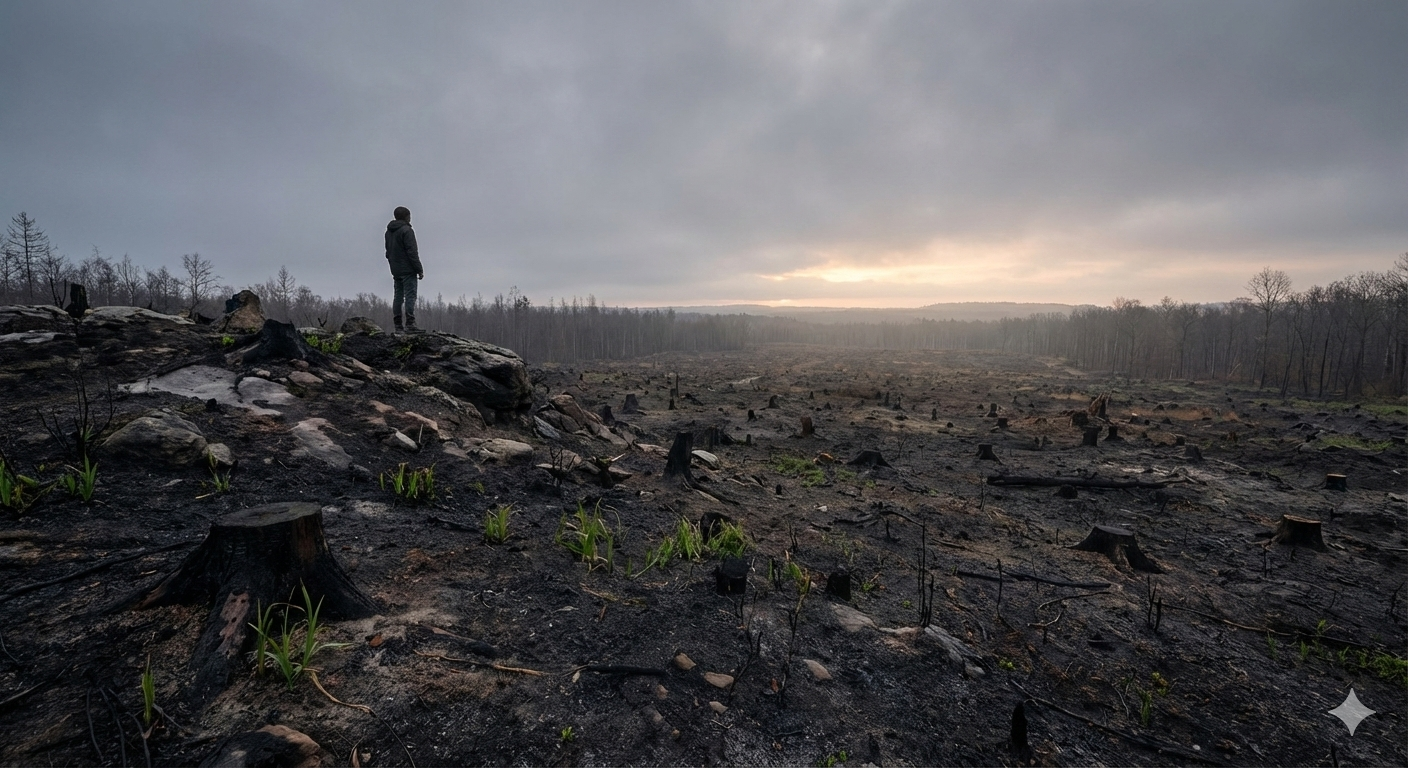
The transition from 2025 into 2026 carries a strange mix of anticipation and dread. It doesn't feel like the typical "fresh start" we are sold in glossy New Year's resolutions. For me, it feels like standing in the center of a forest after a massive wildfire—the smoke has cleared, and the air is finally breathable, but the landscape I once knew is unrecognizable.
This is the clean slate I never asked for, born from a year that scorched everything I cherished: my mother, my career, and the illusion of a predictable path.
No one told me grief was so binary. I thought there would be a middle ground, but I've found you either face it with a disconnected apathy—observing it from a safe distance—or you are crushed under its weight with such intensity that it feels like the oxygen has been siphoned from your lungs.
When my mom passed away in May, I felt a strange gratification that the physical world seemed to understand something monumental had occurred. I didn't have to endure a sunny sky and singing birds while my world ended. Instead, I was granted the apt sound of rain and thunder—the heavens mourning alongside me. I sat in that downpour feeling as though, for just a moment, the very elements acknowledged my anguish. Condolences were mere noise in that moment. I was desperate for human comfort, yet I hated the words. I just wanted someone to hold me in silence. To let me weep, yell, or lose my mind, and be a solid weight holding me to the earth so I didn't float away entirely. Yet, the human inclination is to speak—to offer advice and platitudes. The one person who could have taken away the unbearable weight had left this world, and I couldn't follow where she had gone.
In the aftermath, I hated the pity in people's eyes. I felt like an animal in a zoo—a strange creature that bore a resemblance to the old Tia, but had been fundamentally altered by touching the cruel hand of death. I looked at others still wearing their rose-tinted glasses of innocent hope and envied their blissful ignorance. My own hope and faith felt locked away, the map lost in the fire.
My life had become a non-seaworthy vessel with too many leaks. The waves were tossing it about, and I was clinging to the railing, salt in my eyes, just praying to hold on long enough for a beam of light to pierce the chaos.
I knew I couldn't keep fighting the waves head-on. I was drowning. I needed a different strategy—a way to survive an unwinnable war. And history offered an unexpected answer.
We are often told that when things fall apart, we must strive harder to put them back together. But in 217 BC, the Roman Republic faced an apocalypse that proved otherwise.
Hannibal Barca, perhaps the greatest military tactician in history, had done the impossible: crossing the Alps with elephants and an army to descend upon Italy. He was unstoppable. In battle after battle, he didn't just defeat Roman armies; he annihilated them.
Rome was terrified. Their instinct, driven by panic and pride, was to strike back immediately—to raise another army, meet Hannibal in an open field, and out-strive him through sheer force of will.
In this moment of supreme crisis, Rome appointed Quintus Fabius Maximus to save the state. Everyone expected Fabius to attack. Instead, he did something that shocked the ancient world: He refused to fight. Fabius knew his army was traumatized. He knew that "striving"—meeting the enemy head-on in a frantic attempt to fix the problem—would lead to total destruction.
So, he adopted a strategy of radical restraint. He shadowed Hannibal's army through the countryside, always keeping his own troops on high, rocky ground where the enemy couldn't reach them. He sat. He watched. He waited.
The pressure on Fabius to act was immense. His soldiers called him a coward. The politicians back in Rome mocked him, dubbing him Cunctator—"The Delayer." They wanted action.
But while Fabius stood still on the high ground, Hannibal's army began to fray. They grew exhausted chasing a shadow. Fabius Maximus understood something no one else did: By refusing to be drawn into frantic action, he was controlling the pace of the war. His stillness was not passivity; it was the ultimate economy of force.
"The Delayer" saved Rome. He proved that the discipline to stand firm on high ground is often a more powerful weapon than the sword.
If you are entering this new year feeling leveled by loss or disappointment, hear this: Grief is your Hannibal. Panic is its cavalry.
They want to draw you into a frantic, exhausting battle on their terms. The modern world wants you marching to the tempo of an "unseen drummer," striving until you have nothing left.
Do not take the bait. Like Fabius, take the high ground. Take action by waiting. Give yourself time and space to reflect on what you've gone through and to come to terms with some of the more difficult aspects of life. This rest will bring a recentering and a peace that striving sometimes can't supply.
Your Call to Action: The Sabbath Reset
Fighting the battle just to keep from going under is exhausting. If you feel disjointed, I want you to join me in the first essential step of reclamation.
Before the first week of 2026 concludes, commit to a Sabbath Reset.
1. Declare a 24-hour Cessation. From sunset Friday to sunset Saturday (or any 24-hour block you choose), stop the "war for your ears." No podcasts. No work emails. No toxic scrolling. Silence the noise so you can hear yourself think.
2. Embrace the Middle Space. Use this time to just sit. Do not try to "fix" your career or solve your grief in one day. Simply acknowledge that you are a human being, not a machine, and you require rest to function.
3. Find Your Sensory Anchor. Find one small, sensory thing that reminds you of a time you felt safe or "at home." It could be a specific scent, the sound of rain, or a traditional meal. Lean into that sensation.
We are moving from a year of scorching loss to a year of intentional growth. But first, we rest.