Rebellion or Renaissance? Navigating the Great Public Health Shake-Up
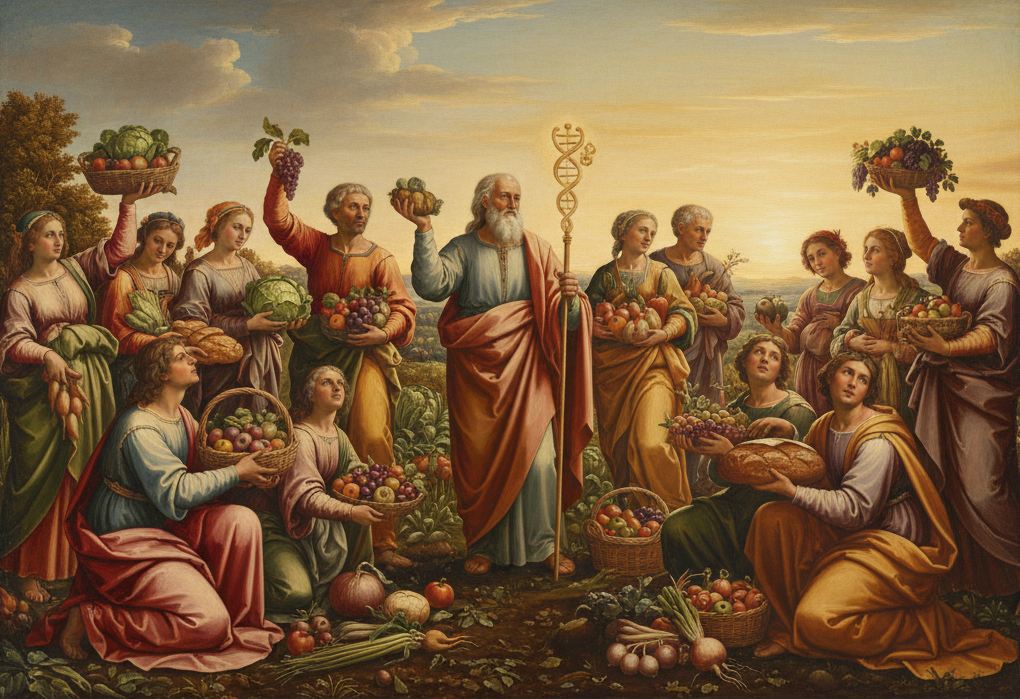
If you've been paying attention to the headlines this week, you've likely felt the ground shifting. From CNN sounding the alarm on the hidden dangers of food preservatives to the historic release of the 2025–2030 Dietary Guidelines and the significant updates to the childhood vaccine schedule—the landscape of American healthcare is in the middle of a massive shake-up.
For some, these changes might feel like a rebellion against the status quo, and that can be unsettling. But I challenge you to see it through a different lens: a Public Health Renaissance. This isn't about politics; it's about a return to truth, transparency, and a focus on getting people healthy again. It is a wonderful opportunity to move away from 'sick care' and back toward a world where individuals have the agency and knowledge to protect their own bodies.
Trust Over Stiff-Arming: The New Global Alignment
One of the most talked-about changes is the update to the childhood vaccine schedule. By narrowing the focus to core, high-impact immunizations, America is moving back into alignment with the best practices of peer nations like Germany, Denmark, and Japan. In these countries, public health has refreshingly focused on building a foundation of communal trust rather than stiff-arming mandates. When health organizations provide honest, measured guidance rather than rushed requirements, the result is actually higher levels of participation and better health outcomes. It's a Middle Way approach: prioritizing transparency to build the trust that a healthy government-society relationship requires to thrive.
The Pyramid Reset: Whole Foods vs. Refined Grains
For decades, our national food policies were stuck in a time capsule. While independent research had identified the dangers of refined carbohydrates years ago, our official guidelines continued to prioritize the very breads and grains that drive metabolic dysfunction. Finally, the federal government has unveiled a historic reset of the food pyramid—turning its back on added sugars and ultra-processed carbohydrates.
Why is this shift so monumental? Because it finally moves us past the simplistic (and often harmful) myth of "Calories-In vs. Calories-Out."
We've been told that losing weight is a simple math equation: eat less, move more. But your body isn't a calculator; it's a complex chemical laboratory. Starving yourself rarely works because it ignores the nuance of human biology. Health is a delicate dance between metabolism, genetics, movement, and—most importantly—nutritional quality.
The Blood Sugar Rollercoaster
It isn't just about the amount of energy you consume; it's about the Blood Sugar Stability that energy provides.
Refined Grains (The Spiked Path)
When you swap a steak for glyphosate-sprayed oats or bleached rice, you are essentially feeding your body pure starch—which is just sugar in a different mask. These isolated carbs cause immediate spikes in blood glucose. Over time, your pancreas is forced into overtime, overproducing insulin until your cells stop listening. This Insulin Resistance is the mother of chronic illness, from Type 2 diabetes to heart disease.
Whole Foods & Healthy Fats (The Stable Path)
Fats are not a bad word. When we focus on proteins, vegetables, and ancestral fats like olive oil, butter, and tallow, we provide our bodies with a steady, slow-burning fuel. These foods don't crash the system; they keep the engine of your metabolism running smoothly.
The Biology of the "Intruder"
The science of how we eat is just as important as what we eat. The recent CNN report highlighted a discovery that public health advocates have whispered about for years: the Food Matrix.
"The hypothesis here is when you isolate one substance from its original matrix of a whole fruit or vegetable, the action on our health can be different depending on the way our gut microbiota will digest it."
When we eat foods that have been seriously altered—where nutrients have been isolated or synthetic preservatives added—our cells treat them as intruders. These compounds can cause oxidative stress and cellular damage at a mitochondrial level. Instead of recognizing the food as fuel, your body triggers low-level systemic inflammation. Left unchecked, this chronic inflammation is what drives the skyrocketing rates of chronic disease we see today—affecting over 50% of American adults. This is why most fillers, preservatives, additives, and stabilizers should be avoided.
Bio-Individuality: Your Unique Code
Are you living a sedentary lifestyle? Are you genetically predisposed to certain types of fat accumulation? These factors matter. There is no "one-size-fits-all" manifesto for the human body. However, the universal constant is the Matrix.
Choosing whole foods over processed substitutes is the first step in respecting your body's unique 'physics.' We are moving away from the era of bleached grains and entering a time where we recognize that a steak provides your body with a different set of instructions than a bowl of processed starch.
The Miracle of Self-Healing
Despite these challenges, the most optimistic truth is this: Your body is a miracle. It was designed with an incredible capacity for self-healing and regeneration. While it is always better to turn the cart around before a diagnosis happens, it is never too late to start. Like a garden that has been neglected, your inner terrain can bloom again if you start providing it with the right environment.
Think of your health like a stock market investment. You don't need to dump $10,000 in today to see a return. One small, intentional dollar invested into your health today —choosing a whole egg over a processed cereal or oats—will compound into a far greater investment than you can imagine. Rome wasn't built in a day, and your health won't be either—but every whole-food choice is a brick in that foundation.
Baby Steps
We are all busy. You don't need to be a revolutionary to be healthy. You just need to be a little more curious than you were yesterday.
1. Become Your Own Advocate: Download an app like Olive, Yuka, or TrashPanda. These tools allow you to scan the barcodes of the food you currently buy to see exactly what 'isolates' are hidden inside. Knowledge is the first step to agency.
2. Shop the Perimeter: The most transformative change you can make is to shop the outer aisles of the supermarket. This is where the whole foods live—the produce, the meats, the eggs. The middle aisles are often where the 'altered' foods reside. Aim to eat food as close to how it was made as possible. Buy frozen bread (the Eziekiel brand is my fav) instead of the shelf-stable stuff that never grows mold.
3. Find Your Local Source: Use an app like 'Localize' or the farm map at MyHealthForward.com to find a local co-op. Reconnecting with your food source is the ultimate step in health agency.
4. Train Your Palate: Now for a tough love moment. If you don't like vegetables, it's likely because your palate has been hijacked by high-fructose corn syrup and synthetic flavors. You can retrain your taste buds. It takes about two weeks of consistent whole-food eating for your palate to re-calibrate.
Your Call to Action: The Pantry Audit
Pick three items in your kitchen today. Scan them or read the labels. If they look like a chemistry textbook, find one simple, whole-food swap for your next grocery trip.
Coming Next: We've talked about the food matrix, but next we're diving into the most essential building block of life itself. We're talking about Water—why the source matters and why not all water is created equal.
Buckle up for that rodeo.